Additional information
| Weight | 223 g |
|---|---|
| Dimensions | 24 × 16 cm |
| Editors | |
| ISBN | 9789062992195 |
| Publisher | |
| Publication Year | 2009 (30-3-2009) |
€25,00 excl. VAT
Also available as ebook on eBooks.com.
Get it on Google Play.
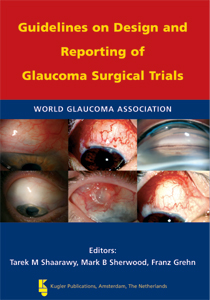
It is evident that in the last couple of years there has been a surge of interest in research in the field of glaucoma surgery. This includes research in the improvement of conventional glaucoma surgery; trabeculectomy, and glaucoma drainage devices, as well as research in more recently introduced surgical methods and their emplacement in our range of surgical therapeutic options. Modulation of wound healing, a factor of paramount importance, has also received its share of research interest. More recently, research has embarked on identifying different surgical approaches and alternative surgical strategies.
Clinical glaucoma surgical research is currently hindered by, among other things, the lack of uniform guidelines for clinical glaucoma surgical trials reporting. This has been clearly highlighted in the last ten years by the controversy that arose from the introduction of non-penetrating glaucoma surgery (NPGS). Despite a plethora of reports currently in the literature, it is quite difficult to make certain and accurate evaluation of the exact location of NPGS among our options. This is mainly because of the absence of a common platform (guidelines) on which studies can be reported and thus compared. Currently such reports are reported with diverse, variable and inconsistent methodology. This is firstly because such guidelines do not exist, secondly because there is no general consensus, even among the experts in the field, and finally because basic knowledge pertaining to proper methodologies, ethical factors, and statistics are not readily available to all.
Seeing a pressing need for the creation and publication of clear and detailed guidelines for glaucoma surgical trials, the World Glaucoma Association (WGA) took the initiative to form a steering committee and to invite a working group of more than 70 leaders in the field of glaucoma research. The choice of invited scientists took into consideration all aspects related to glaucoma surgical research, spanning from clinical research to economic aspects, statistics, and ethical considerations. The choice of invited scientists was also based on a well-established and active track record of research in this domain.
What you have in your hands is the result of their combined efforts, their brainchild so to speak. After months of debate, controversy, and constructive discussion this group has achieved a consensus on a myriad of topics. These guidelines were validated by the Board of Governors of the WGA, and boards and members of all of its member societies. It can only be useful if it is well adopted by the majority, if not all researchers in this vital field. The publication of these guidelines is seen by the steering committee as a first step, to be followed by many others aiming to promulgating and advocating its messages.
Tarek Shaarawy
Franz Grehn
Mark Sherwood
Introduction
Recommended Methodology for Glaucoma Surgical Trials, R.K. Parrish II, D.S. Minckler, D. Lam, N. Pfeifffer and P. RojanaPongpun
Summary Points
Introduction
The Problem
I. Clinical Interventional Studies (Clinical Trials)
II. Observational Studies
III. Other Study Types
MSC Guidelines
I. Study Design (Levels of Study)
II. Baseline Pre-Operative Data
III. Procedure Methodology
IV. Post-Operative Assessment
References
Consensus on definitions of success, D.K. Heuer, K. Barton, F. Grehn, T. Shaarawy and M. Sherwood
Summary Points
Introduction
Report
I. Intraocular Pressure Documentation
II. General Data Presentation Requirements
III. Other Possible IOP-Related Outcome Measures
IV. Visual Fields
V. Visual Acuity
VI. Complications
VII. Follow-up
Conclusions
Further Research Needed The Ethics of Innovation, A.V. Levin and G.L. Spaeth
Summary Points
The Problem
Report
I. Clarifying the Objective
II. Conflict of Interest
III. Informed Consent
IV. Other Research Ethics Principles
Conclusions
Further Research Needed
References
Reporting post-operative complications in glaucoma surgical trials, H.D. Jampel
Summary Points
The Problem
Report
I. Intraoperative Complications
II. General Post-operative Complications
III. Complications Specific to Trabeculectomy (Bleb-related)
IV. Complications Specific to Drainage Device Surgery
V. Complications Specific to Non-penetrating Glaucoma Surgery
Conclusions
Overview
Guidelines for economic evaluation of glaucoma surgical trials, S. Kymes and A. Azuara-Blanco
Summary Points
Introduction
I. Methods of Economic Evaluation
II. Conducting Cost-effectiveness Analysis
III. Cost Utility Analysis
IV. Recommendations
Further Research
References
Statistical aspects of reporting glaucoma surgical studies, W.J. Feuer
Summary Points
Introduction
Report
I. Design Considerations
II. Analysis
III. Reporting
Conclusions
Further Research Needed
References
Overview
Appendix
| Weight | 223 g |
|---|---|
| Dimensions | 24 × 16 cm |
| Editors | |
| ISBN | 9789062992195 |
| Publisher | |
| Publication Year | 2009 (30-3-2009) |